What makes a P2P pricing bot worth paying for
There are free P2P scripts on GitHub. There are Telegram bots. So the fair question before you pay for one is: what does a paid pricing bot do that the free ones don't? Here is the honest answer from the desk.
The job is not "change my price". The job is "hold the top spot without losing margin"
Anyone can write ten lines that copy the cheapest competitor. The hard part is doing it correctly, all day, under the exchange's rules. On a P2P ad list, the merchant at the top takes most of the volume. The moment someone beats you by a fraction, you drop down the list and your orders dry up. So you have to be one step better than the best real competitor, but never so aggressive that you start a price war that wipes out your spread.
That single sentence hides a lot of decisions. Which competitors count? How far do you step? Where is your floor? What happens when the list is empty? How do you avoid the exchange rejecting your update for being "too close" to your own other ad? A free script makes none of those decisions well. A tool worth paying for makes all of them, every cycle.
The five things that separate a real tool
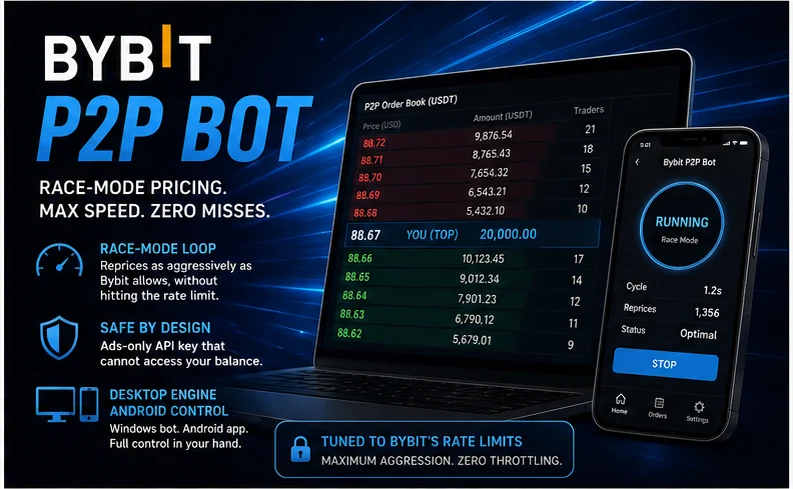
It respects the exchange's rate limits. Bybit, for example, caps how often you can change an ad: around ten times every five minutes. A simple bot that reprices on a dumb timer gets slowed down or rejected. A real one separates how fast it watches the market from how often it spends a price change. It reacts instantly without hitting the cap.
It filters who counts as competition. You do not want to chase a regular user posting an unrealistic ad with a tiny limit, or a merchant demanding extra KYC that your buyers can't pass. A real tool lets you compete only with the merchant tiers you choose, skip KYC-locked ads, and block specific rivals. Your price then follows only the ads that matter.
It protects your margin with a hard floor. Price wars are won by the merchant who set a floor and walked away, not by the one who chased to the bottom. A real tool refuses to cross the line you set. When there is no valid competitor, it falls back to a price you chose in advance.
It doesn't fight itself. If you run two ads on the same coin and side, the exchange rejects updates that put them too close together. A real tool keeps a gap between your own ads so both stay live.
Its API key can't touch your money. This is non-negotiable. A pricing bot only needs to read the market and edit your ads. If a tool asks for withdrawal permission, it is either badly built or not to be trusted. The bots worth paying for run on a read-only or ads-only key that physically cannot move funds.
So is it worth it?
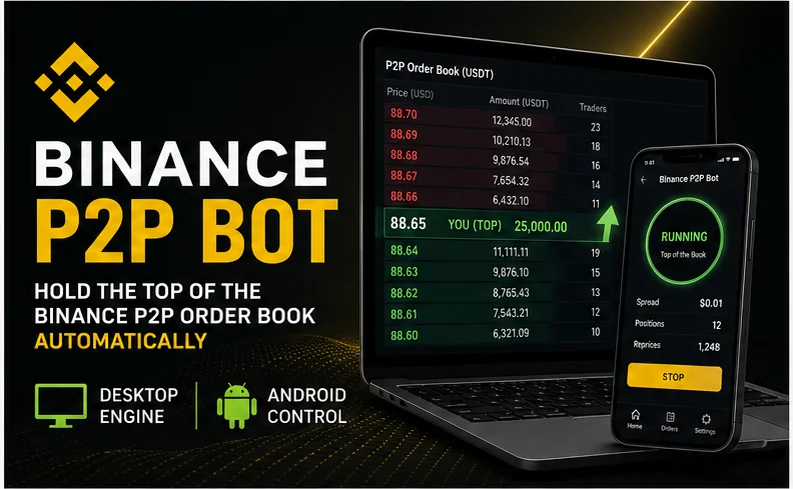
If you run a P2P desk seriously, the math is simple. Manual repricing is a full-time babysitting job, and the moment you step away, you lose the top spot. A good tool holds that spot for you. It stays inside your margin and the exchange's rules, on a key that cannot empty your account. It pays for itself in the orders you stop losing to faster competitors. That is the whole case. It is why the Binance and Bybit bots are priced as products, not donations.